
Honing Rods
Categories
Brands
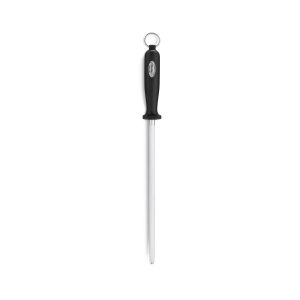
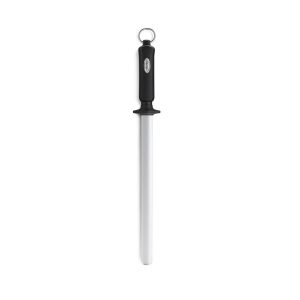
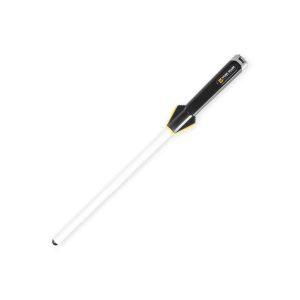
Work Sharp Ceramic Honing Rod
Original price was: 31,99 €.25,99 €Current price is: 25,99 €.
Honing Rods – Quick daily edge maintenance
A honing rod is primarily a maintenance tool. Instead of removing significant material, the honing rod typically helps realign the fine edge so the knife feels sharp again.
This is why honing rods are popular in the kitchen: it takes just seconds, and you can keep the knife in top shape between actual sharpenings. This makes full sharpening less frequent, and knives last longer because you don’t need to “grind hard” as often.
Key Points
• Fast method for maintaining the edge
• Reduces the need for frequent sharpening with whetstones or sharpeners
• Good routine for frequently used knives
• Results depend on correct technique
Honing rods are for daily maintenance: they help the knife feel sharp again between sharpenings.
Honing Rod vs. Knife Sharpener – What is the difference?
Here is the main difference: A knife sharpener restores the edge by removing material and rebuilding the bevel. A honing rod typically maintains the edge by realigning it so it performs correctly again. Therefore, a honing rod will often help a knife that feels “tired,” but if the knife is truly dull or has small nicks, it usually needs proper sharpening to be fully restored.
In short
A honing rod maintains the edge—knife sharpening restores the edge.
Key Elements
• Honing rod = maintenance and “realignment” of the edge
• Knife sharpener = restores edge by removing material
• Honing rod does not help a very dull knife
• Use both as a routine: maintain often, sharpen when necessary
Which honing rod should you choose – steel, ceramic, or diamond?
The choice depends on how much effect you want and how gently you wish to work.
Classic honing steel (steel) is often chosen for general maintenance and for knives where you want a mild, controlled effect.
Ceramic honing rod can provide a more noticeable “refresh” and often feels like a good step between regular maintenance and actual sharpening.
Diamond honing rod has more “bite” and can remove some material, making it effective—but it requires more care so you don’t become too aggressive.
In short
Steel is mild for maintenance, ceramic is a strong all-around choice, and diamond is effective but requires more control.
Keep the following in mind
• Steel = mild maintenance
• Ceramic = more effect and often a good all-rounder
• Diamond = most effective, but requires gentle technique
• Choose based on knife type and how “tired” the edge feels
Sharpening angle and technique – how to use a honing rod correctly
Many search for “angle” because that is what determines the result. A honing rod works best when you use a stable angle, light pressure, and consistent strokes. If you press too hard or work too fast, you risk an uneven result and, in the worst case, an edge that feels worse afterward. A calm routine with a few controlled strokes on each side usually yields the best and most predictable result.
In short
A stable angle and light pressure are key—honing is about control, not force.
Key Elements
• Stable angle provides consistent effect
• Light pressure is better than heavy force
• A few controlled strokes beat many fast ones
• A calm routine provides the most durable sharpness
How often should you use a honing rod?
It depends on use, but many use a honing rod as a short routine before cooking or a few times a week. The idea is to catch the edge “in time” before the knife feels truly dull. If you only use a honing rod when the knife is already significantly dull, you